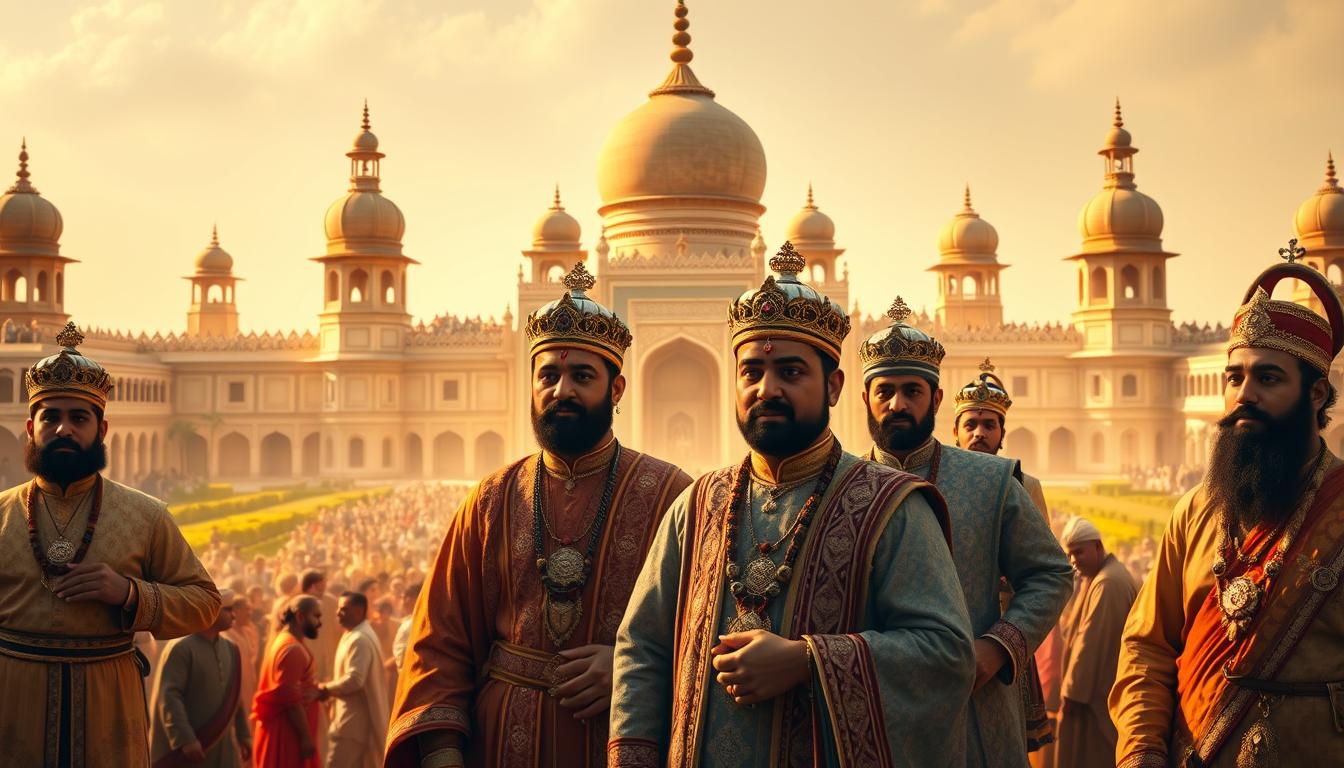
Unravel the Legacy of the Mughals Who Ruled India
The Mughal Empire was a significant force in shaping Indian history. At its peak, it was one of the largest and most influential empires in the world.

The Mughals brought with them a rich cultural heritage, architectural innovations, and administrative reforms that had a lasting impact on the region.
This article will explore the legacy of the Mughal Empire, delving into its history, cultural achievements, and the enduring influence on modern India.
Key Takeaways
- The Mughal Empire played a crucial role in Indian history.
- Mughal rulers introduced significant cultural and architectural innovations.
- The empire’s legacy continues to influence modern India.
- The Mughal Empire was known for its administrative reforms.
- The cultural heritage of the Mughals remains an integral part of Indian identity.
The Origins and Rise of the Mughal Empire
The foundation of Mughal rule in India was laid by Babur, a Central Asian ruler. Babur, a descendant of Timur and Genghis Khan, invaded India in 1526, marking the beginning of the Mughal Empire. His victory over Ibrahim Lodi at the Battle of Panipat not only showcased his military prowess but also laid the groundwork for a dynasty that would rule India for centuries.
Babur’s Invasion and the Foundation of Mughal Rule
Babur’s invasion of India was a pivotal event in Indian history. With his advanced military tactics and artillery, Babur was able to defeat the larger armies of the Delhi Sultanate. His victory at Panipat in 1526 was a decisive moment that led to the establishment of Mughal rule in India. Babur’s memoirs, the Baburnama, provide valuable insights into his campaigns and the conditions of the time.
After consolidating his power, Babur focused on administrative reforms, laying the foundation for a robust governance system.
“The Mughal Empire was founded on the principles of military strength, administrative acumen, and cultural tolerance.”
This blend of military might and administrative capability set the stage for the expansion and prosperity of the Mughal Empire under his successors.

Central Asian Roots and Cultural Influences
The Mughals brought with them a rich cultural heritage from Central Asia, which significantly influenced the development of their empire in India. Persian became the court language, and the art, architecture, and literature of the Mughals were heavily influenced by Persian and Central Asian traditions. The blending of these cultures with local Indian traditions resulted in a unique cultural synthesis that characterized the Mughal Empire.
The Mughals were patrons of art and architecture, and their Central Asian roots are evident in the monuments they built. The use of arches, domes, and intricate ornamentation in Mughal architecture reflects the Persian and Timurid influences. This cultural fusion not only enriched the cultural landscape of India but also left a lasting legacy that continues to be celebrated today.
The Golden Age: Prominent Mughal Emperors
The Mughal Empire reached its zenith under the rule of several prominent emperors who left an indelible mark on Indian history. Their reign was characterized by significant cultural, architectural, and military achievements that shaped the empire’s legacy.
Akbar the Great: Policies and Expansion
Akbar, also known as Akbar the Great, was one of the most influential Mughal emperors. He is remembered for his policies of religious tolerance and administrative reforms. Akbar’s court was renowned for its scholars, artists, and philosophers from various backgrounds, fostering a culture of intellectual curiosity and exchange.
Religious Tolerance and Din-i-Ilahi
Akbar introduced Din-i-Ilahi, a syncretic religion that aimed to blend the best elements of various faiths practiced within the empire. This move was part of his broader policy of religious tolerance, which allowed different communities to coexist peacefully. Akbar’s efforts to promote understanding among different religious groups were a hallmark of his reign.
The introduction of Din-i-Ilahi was not merely a religious reform but also a political strategy to unify the diverse population under a single, overarching framework. Although it did not survive beyond Akbar’s reign, it reflected his vision for a harmonious society.
Military Conquests and Territorial Expansion
Akbar’s military campaigns expanded the Mughal Empire significantly, incorporating various regions and territories into the imperial fold. His military conquests not only increased the empire’s size but also brought diverse cultures and resources under Mughal control.
The expansion under Akbar laid the foundation for the Mughal Empire’s status as a major power in the region, setting the stage for further growth and cultural development.
Shah Jahan: The Architectural Visionary
Shah Jahan, known for his architectural achievements, left an enduring legacy in the form of monuments like the Taj Mahal. His reign is often associated with the zenith of Mughal architecture, characterized by the blend of Persian, Indian, and Islamic styles.
Under Shah Jahan, the capital city of Shahjahanabad (modern-day Old Delhi) was developed, featuring iconic structures such as the Red Fort. His architectural patronage not only beautified the empire’s cities but also reflected the cultural sophistication of the Mughal court.

Aurangzeb: Controversial Legacy and Religious Policies
Aurangzeb’s reign was marked by controversy, particularly regarding his religious policies. Unlike Akbar, Aurangzeb adopted a more orthodox approach to Islam, reimposing the jizya tax on non-Muslims and overseeing the destruction of some Hindu temples.
Aurangzeb’s military campaigns expanded the empire’s boundaries, but his policies also led to internal strife and tensions with various regional powers. The legacy of Aurangzeb remains a subject of debate among historians, with some viewing him as a devout ruler and others as a divisive figure.
Which Statement Best Describes the Mughals Who Once Lived in India?
Understanding the Mughals requires examining their multifaceted legacy, which encompasses cultural, military, and economic achievements. The Mughal Empire, which ruled India from the 16th to the 19th century, was a complex entity that left a lasting impact on the subcontinent. Their influence can still be seen in various aspects of Indian culture and society today.
Cultural Synthesizers and Patrons of the Arts
The Mughals were renowned for their role as cultural synthesizers, blending Persian, Turkish, and Indian influences to create a unique cultural identity. They were patrons of the arts, supporting the development of literature, music, and visual arts. This patronage led to the creation of some of the most iconic works of Indian art and architecture.
Their cultural synthesis is evident in the architectural marvels they left behind, such as the Taj Mahal, which combines elements from various cultures. The Mughal courts were also centers of literary activity, with many poets and writers producing works in Persian and other languages.
Military Conquerors and Administrative Innovators
The Mughals were also military conquerors who expanded their empire through strategic military campaigns. They were skilled administrators who introduced innovative systems of governance, including the Mansabdari system, which helped to maintain control over their vast territories. This system allowed for efficient administration and revenue collection.
Their military prowess and administrative skills enabled the Mughals to maintain a large and diverse empire for centuries. They were able to integrate various regions and cultures into their empire, creating a relatively stable and prosperous state.
Complex Religious Legacy: From Tolerance to Orthodoxy
The Mughals had a complex religious legacy, with some emperors promoting tolerance and others adopting more orthodox policies. Akbar, for example, was known for his religious tolerance and attempted to create a syncretic faith. In contrast, Aurangzeb’s reign was marked by a return to more orthodox Islamic practices.
This shift in religious policy had significant implications for the empire, influencing relations between different religious communities and affecting the overall social fabric.
Economic Powerhouse of the Medieval World
The Mughal Empire was an economic powerhouse in the medieval world, with a thriving economy based on agriculture, trade, and industry. The empire’s extensive trade networks and prosperous cities made it a hub of economic activity. The Mughal administration also implemented policies that promoted economic growth.
Their economic achievements had a lasting impact on the region, shaping the course of Indian economic history for centuries to come.
The Magnificent Mughal Architecture
Mughal architecture represents a unique fusion of different cultural influences, resulting in some of the world’s most breathtaking monuments. This blend of Indian, Persian, and Islamic styles is evident in the iconic structures that were built during the Mughal reign.
The Taj Mahal: Symbol of Eternal Love
The Taj Mahal, one of the Seven Wonders of the Modern World, is a mausoleum built by Emperor Shah Jahan in memory of his beloved wife, Mumtaz Mahal. This monument to love is renowned for its perfect proportions, intricate marble inlays, and calligraphic inscriptions. The Taj Mahal’s design is a blend of Persian, Ottoman, and Indian architectural styles, making it a masterpiece of Mughal architecture.
Red Fort and Other Architectural Marvels
The Red Fort, or Lal Qila, is another iconic example of Mughal architecture, commissioned by Shah Jahan in 1638. This imposing fortress, made of red sandstone, served as the imperial palace in the capital city of Shahjahanabad (now Old Delhi). The Red Fort’s architecture is characterized by its large scale, intricate decorations, and the blend of Persian and Indian styles.
Persian Influences in Mughal Design
Persian influences played a significant role in shaping Mughal architecture. The use of arches, domes, and minarets, along with intricate tile work and calligraphy, are characteristic features of Persian architecture that were incorporated into Mughal buildings.
| Architectural Feature | Description | Example |
|---|---|---|
| Arches and Domes | Characteristic elements borrowed from Persian and Islamic architecture, adding grandeur and elegance. | Taj Mahal, Jama Masjid |
| Intricate Marble Work | Inlays and carvings that showcase the craftsmanship of Mughal artisans. | Taj Mahal, Red Fort |
| Charbagh Gardens | Persian-style gardens divided into four quadrants, symbolizing the four rivers of Jannah (Paradise). | Taj Mahal Gardens, Humayun’s Tomb |
Arts, Literature, and Cultural Contributions
The Mughals were not just conquerors; they were also patrons of the arts and literature. Their court was a melting pot of artists, poets, and musicians from various backgrounds, leading to a rich cultural synthesis.
Miniature Paintings and Visual Arts
Mughal miniature paintings are renowned for their intricate details and vibrant colors. These paintings often depicted court scenes, mythological themes, and everyday life, showcasing the artistic finesse of the era. The Mughal emperors, particularly Akbar and Jahangir, were connoisseurs of art, encouraging the development of this unique style.
Literary Achievements and Language Development
The Mughal period saw significant literary advancements, particularly in Persian and Urdu. The royal court attracted poets and scholars from across the region, fostering a literary culture.
Persian and Urdu Poetry
Persian was the court language of the Mughals, and it saw a flourishing of poetry during this era. Simultaneously, Urdu began to emerge as a distinct literary language, influenced by Persian, Arabic, and local dialects.
Historical Chronicles and Biographies
The Mughals also patronized the writing of historical chronicles and biographies, such as the Akbarnama and Padshahnama, which provide valuable insights into the history and culture of the period.
Music and Performing Arts Under Mughal Patronage
Music and dance were integral to Mughal court life. The emperors were patrons of various musical traditions, including Hindustani classical music. The development of new ragas and the fusion of different musical styles were encouraged, enriching the cultural heritage of India.
Daily Life in Mughal India
Daily life in Mughal India was a complex tapestry woven with threads of nobility, commerce, and culture. The Mughal Empire, which once sprawled across a significant part of the Indian subcontinent, was known for its rich cultural heritage and administrative prowess.
Court Life and Nobility
The Mughal court was the epicenter of political power and cultural refinement. Nobles and courtiers lived in opulent mansions, surrounded by luxuries and extravagant lifestyles. The emperor’s court was a place of grandeur, where ceremonies and rituals were conducted with great pomp. The nobility played a crucial role in the administration, often holding key positions in governance and military leadership.
Urban Centers and Trade Networks
Mughal India boasted of several thriving urban centers, such as Agra, Delhi, and Lahore, which were hubs of trade and commerce. These cities were connected through extensive trade networks that stretched across the empire and beyond, facilitating the exchange of goods, ideas, and cultures. The urban centers were also known for their architectural marvels, including mosques, forts, and public buildings.
| Urban Center | Notable Features | Significance |
|---|---|---|
| Agra | Taj Mahal, Red Fort | Architectural heritage, Mughal capital |
| Delhi | Qutub Minar, Red Fort | Historical significance, trade hub |
| Lahore | Lahore Fort, Badshahi Mosque | Cultural and architectural landmark |
Common People: Farmers, Artisans, and Merchants
The common people in Mughal India included farmers, artisans, and merchants, who formed the backbone of the economy. Farmers worked tirelessly to produce crops, while artisans were skilled in various crafts, such as textiles and metalwork. Merchants played a vital role in trade, both within the empire and with foreign lands. Despite their contributions, the common people often lived simple lives, with their daily experiences shaped by their social and economic circumstances.
Governance and Administration of the Empire
The administrative machinery of the Mughal Empire was renowned for its efficiency and complexity. At its core, the empire’s governance structure was designed to maintain control over a vast and diverse territory.
The Mansabdari System and Military Organization
The Mansabdari system was a cornerstone of Mughal administration, integrating military organization with civil governance. Introduced by Akbar, this system ranked officials, known as mansabdars, based on their military capabilities and administrative roles. The ranking, or ‘zat,’ determined their salary, military obligations, and administrative responsibilities. This system ensured a well-organized military and administrative hierarchy.
Revenue Systems and Economic Policies
The Mughal revenue system was primarily based on land revenue, which was assessed and collected through a well-structured process. The zabt system, another innovation of Akbar’s reign, involved the measurement and assessment of land revenue. This system helped in maintaining a stable revenue stream for the empire, facilitating economic prosperity and public works.
| Revenue System | Description | Impact |
|---|---|---|
| Zabt System | Land revenue assessment based on measurement | Stable revenue stream |
| Mansabdari System | Integrated military and administrative ranking | Efficient governance and military organization |
Legal Framework and Justice Administration
The Mughal legal framework was based on a combination of Islamic law and local customs. The administration of justice was overseen by the emperor and various judicial officers, including qazis and muftis. This system aimed to provide fair and impartial justice, though its effectiveness varied across the empire.
The governance and administrative systems of the Mughal Empire were pivotal in maintaining its vast territorial integrity and ensuring a degree of stability and prosperity. These systems, though complex and sometimes challenging to implement, underscored the empire’s administrative sophistication.
Decline of the Mughal Empire
The decline of the Mughal Empire was a complex process, influenced by both internal dynamics and external factors. This multifaceted collapse transformed the political landscape of India, paving the way for the rise of European powers.
Internal Factors: Succession Disputes and Court Politics
Internal succession disputes and intricate court politics played a significant role in weakening the Mughal Empire. The absence of a clear succession law led to frequent wars of succession, draining the empire’s resources and destabilizing its administration. Nobility infighting further exacerbated the situation, as powerful nobles often supported rival claimants to the throne, fueling instability.
External Challenges: European Colonization
The arrival of European colonizers, particularly the British and French, marked a significant external challenge for the Mughal Empire. These powers exploited the empire’s weaknesses, gradually gaining control over Indian territories through a combination of military might, strategic alliances, and economic leverage. The Battle of Plassey in 1757 was a pivotal moment, marking the beginning of British dominance in India.
| Year | Event | Impact on Mughal Empire |
|---|---|---|
| 1707 | Death of Aurangzeb | Beginning of decline due to succession disputes |
| 1757 | Battle of Plassey | British gain significant control, weakening Mughal authority |
| 1857 | Indian Rebellion | Final collapse of Mughal Empire, establishment of British Raj |
The Last Mughals and the Transition to British Rule
The last Mughal emperors struggled to maintain their authority in the face of encroaching British power. The Indian Rebellion of 1857 marked the final blow, leading to the deposition of the last Mughal emperor, Bahadur Shah II, and the formal establishment of British rule in India. This transition marked the end of the Mughal era and the beginning of a new colonial chapter in Indian history.
The Enduring Legacy of the Mughals in Modern India
The Mughal Empire may have declined, but its legacy continues to shape modern India in profound ways. The cultural, architectural, and administrative achievements of the Mughals have left an indelible mark on the country.
Cultural Synthesis and Indo-Islamic Heritage
The Mughal period was characterized by a unique cultural synthesis, blending Indian, Persian, and Islamic influences. This synthesis is evident in the Indo-Islamic heritage that permeates modern Indian culture, from architecture to cuisine. The Taj Mahal, Red Fort, and other Mughal monuments are not just historical relics but living symbols of this cultural fusion.
The influence of Mughal art and architecture can be seen in contemporary Indian designs, reflecting a blend of traditional and modern elements. For instance, the use of arches, domes, and intricate ornamentation in modern buildings pays homage to Mughal architectural styles.
| Aspect | Mughal Influence | Modern Indian Expression |
|---|---|---|
| Architecture | Use of arches, domes, and ornamentation | Modern buildings incorporating traditional designs |
| Cuisine | Introduction of new ingredients and cooking techniques | Popular dishes like biryani and kebabs |
| Art | Miniature paintings and calligraphy | Contemporary art inspired by Mughal styles |
Influence on Modern Indian Identity and Politics
The Mughal legacy also extends into modern Indian identity and politics. The cultural heritage left behind by the Mughals contributes to the complex identity of India, a country with a diverse history and multicultural society. Politically, the Mughal era is often referenced in discussions about India’s historical continuity and cultural richness.
Moreover, the administrative and governance structures established by the Mughals have had a lasting impact on India’s political and administrative systems. The Mansabdari system, for example, was a significant administrative innovation that influenced subsequent governance models.
In conclusion, the Mughal legacy is a vital part of modern India’s cultural, architectural, and political landscape. Understanding and appreciating this legacy can provide valuable insights into the complexities of Indian identity and the country’s rich historical heritage.
Conclusion
The Mughal Empire, a pivotal force in Indian history, left an indelible mark on the subcontinent’s cultural, architectural, and administrative landscape. As we reflect on the question of which statement best describes the Mughals who once lived in India, it becomes clear that their legacy is multifaceted.
The Mughals were not only skilled military conquerors but also visionary administrators who fostered a rich cultural synthesis. Their patronage of the arts led to the development of breathtaking architectural marvels, such as the Taj Mahal, and a flourishing of literature and music.
The Mughal Empire’s influence on Indian identity and politics is still evident today, with their cultural and architectural achievements continuing to inspire and shape the nation’s heritage. Understanding the Mughal Empire’s history and legacy provides valuable insights into the complexities of Indian history and the evolution of its society.
In conclusion, the statement that best describes the Mughals who once lived in India is one that acknowledges their complex and multifaceted contributions to the region’s history, culture, and identity.
FAQ
Which statement best describes the Mughals who once lived in India?
The Mughals were a complex dynasty that can be described as cultural synthesizers, military conquerors, and patrons of the arts, leaving a lasting legacy in Indian history.
What were the Mughals known for in terms of architecture?
The Mughals were renowned for their architectural achievements, including the Taj Mahal, Red Fort, and other iconic structures that showcased Persian influences and a blend of Indian and Islamic styles.
How did the Mughals contribute to the arts and literature?
The Mughals were significant patrons of the arts, promoting miniature paintings, literature, and performing arts, and their court was a hub for poets, writers, and artists, leading to the development of languages like Urdu.
What was the Mughal Empire’s administrative system like?
The Mughal Empire had a sophisticated administrative system, including the Mansabdari system, revenue collection, and a legal framework, which contributed to the stability and efficiency of their rule.
What led to the decline of the Mughal Empire?
The decline of the Mughal Empire was due to a combination of internal factors, such as succession disputes and court politics, and external challenges, including European colonization, which weakened the empire and paved the way for British rule in India.
What is the Mughal legacy in modern India?
The Mughal legacy continues to influence modern India, with their cultural synthesis and Indo-Islamic heritage remaining an integral part of Indian identity, politics, and culture.